
Key takeaways
- There is no single "best" tracker—the right pick starts with your phone. iPhone users want an Apple Find My tracker; Android users want a Google Find Hub tracker.
- For everyday "where did I leave it?" problems, a Bluetooth + crowd-network tracker is what you want—not a live GPS device.
- The features that move the needle: finding network size, loudness, battery type, water resistance, left-behind alerts, and whether there's a subscription.
- Tracker Mist is a Find My tracker for iPhone users who want the AirTag experience—map, sound, Siri, AirTag-case fit—without the Apple price or any subscription.
The 30-second answer
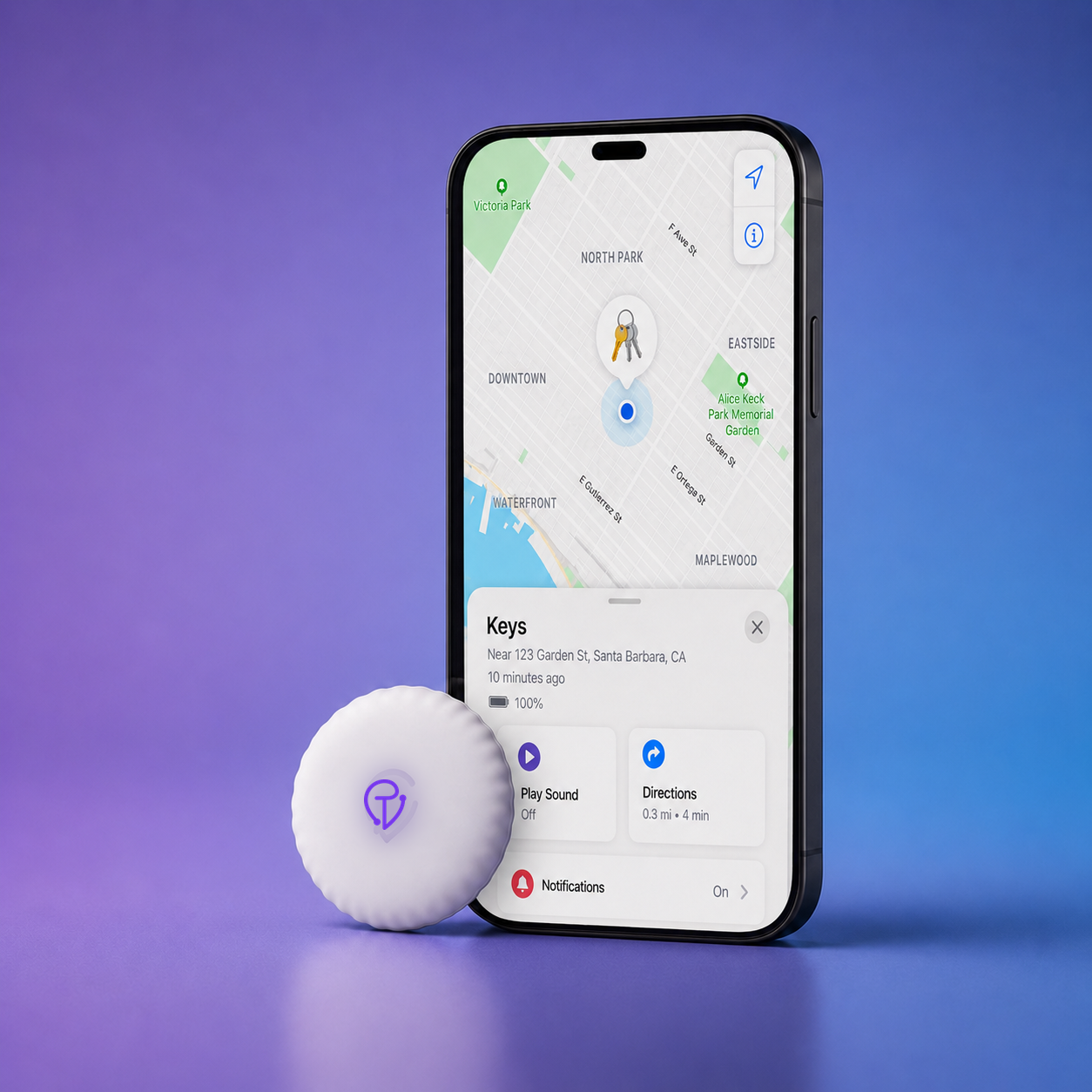
If you have an iPhone and you want to stop losing your keys, wallet, bag, or luggage, buy a tracker that works with Apple Find My—it puts your stuff on the same map as your iPhone, with no extra app and (with the right brand) no subscription. Tracker Mist is built for exactly this.
If you're on Android, choose a tracker certified for Google Find Hub instead. And if you need to follow a vehicle or bike in real time, you don't want a Bluetooth tracker at all—you want a GPS tracker.
Best Bluetooth trackers at a glance
Quick picks by what you're trying to find. We compare publicly available specs across the major item finders—and we're upfront that Tracker Mist is our own iPhone / Apple Find My tracker, so we tell you plainly where a competitor fits better.
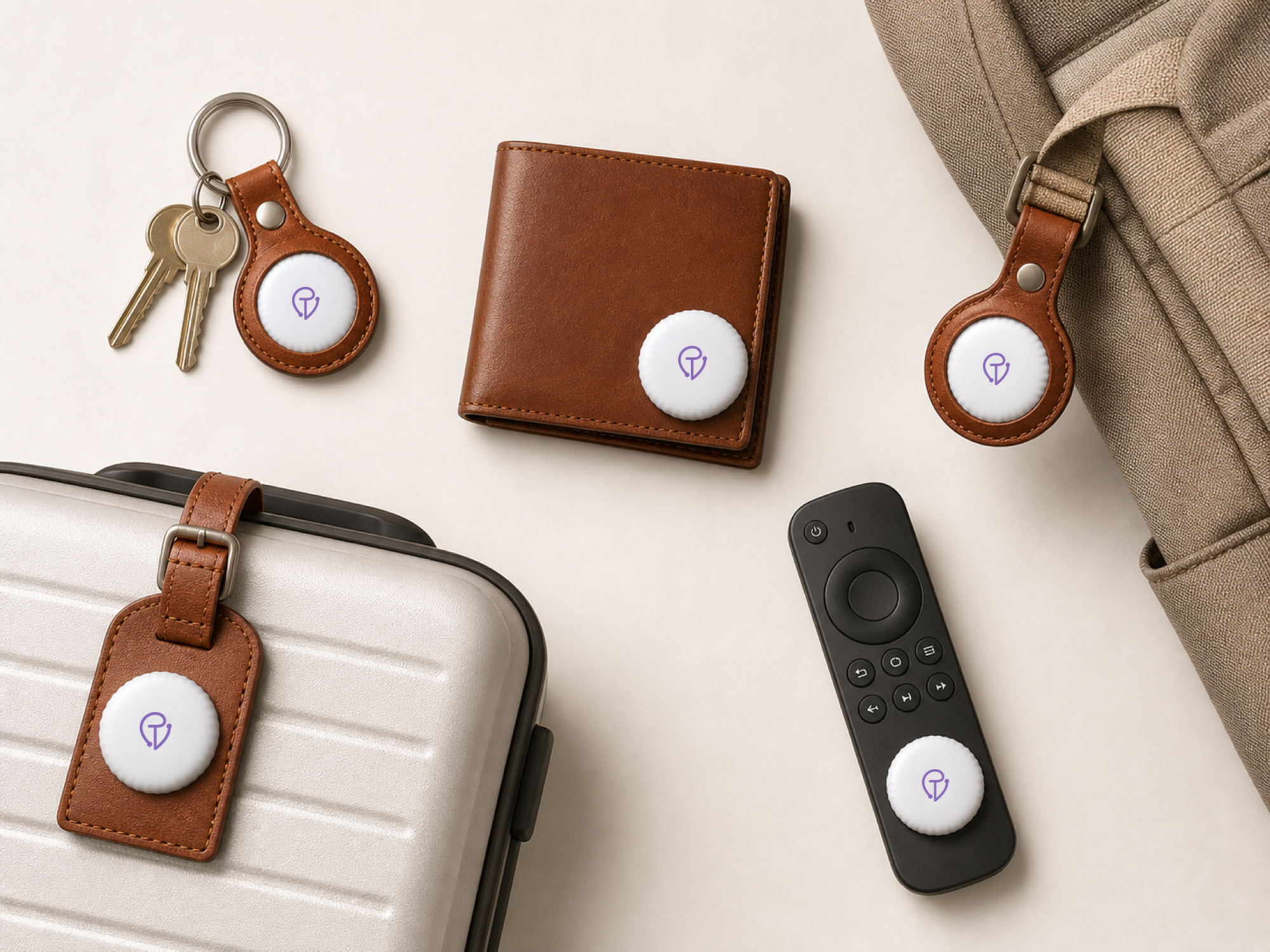
 Tracker Mist
A simple Apple Find My item finder for keys, bags, luggage and everyday essentials.
Apple Find My
No subscription
See how it works
Best AirTag alternative
Tracker Mist
A simple Apple Find My item finder for keys, bags, luggage and everyday essentials.
Apple Find My
No subscription
See how it works
Best AirTag alternative
 Tracker Mist 4-pack
The Find My experience and AirTag-case fit, without the Apple price.
Saves 66%
Replaceable battery
Compare packs
Best for keys
Tracker Mist 4-pack
The Find My experience and AirTag-case fit, without the Apple price.
Saves 66%
Replaceable battery
Compare packs
Best for keys
 Tracker Mist on a keyring
A loud ring and built-in leather fob—ring it or ask Siri.
Keyring
~60 dB ring
Read more
Best for luggage
Tracker Mist on a keyring
A loud ring and built-in leather fob—ring it or ask Siri.
Keyring
~60 dB ring
Read more
Best for luggage
 Tracker Mist in a bag
"Did my bag make the flight?" Airports are full of Find My devices.
Luggage
IP67
Read more
Best for wallets
Tracker Mist in a bag
"Did my bag make the flight?" Airports are full of Find My devices.
Luggage
IP67
Read more
Best for wallets
 Tracker Mist + wallet
Clip the fob to a bill-fold or slip it into a card sleeve.
Wallet
Apple Find My
Read more
Best budget multipack
Tracker Mist + wallet
Clip the fob to a bill-fold or slip it into a card sleeve.
Wallet
Apple Find My
Read more
Best budget multipack
 Tracker Mist 4-pack
Tag keys, bag, luggage and the remote—cheaper per tag than one premium tag.
From $19.99
Read more
Best for Android users
Tracker Mist 4-pack
Tag keys, bag, luggage and the remote—cheaper per tag than one premium tag.
From $19.99
Read more
Best for Android users
 Tile or Chipolo
Tracker Mist is iPhone-only. On Android, pick a Tile or a Google Find Hub tag.
Not Tracker Mist
Read more
Best for Samsung users
Tile or Chipolo
Tracker Mist is iPhone-only. On Android, pick a Tile or a Google Find Hub tag.
Not Tracker Mist
Read more
Best for Samsung users
 Samsung SmartTag2
Galaxy owners get the tightest experience through SmartThings Find.
Galaxy only
Read more
Samsung SmartTag2
Galaxy owners get the tightest experience through SmartThings Find.
Galaxy only
Read more
How Bluetooth trackers work (briefly)
A Bluetooth tracker is a small tag that broadcasts a secure, low-energy Bluetooth signal. Your phone hears it directly when it's nearby, and a worldwide crowdsourced finding network of other phones anonymously relays its last-seen location when it's far away. There's no GPS chip and no cellular bill. Here's the full explainer →

Many trackers marketed with the word "GPS" are actually Bluetooth + crowd network. That's great for finding misplaced things and weak for real-time tracking. Know which one you're buying.
First: pick your ecosystem
This is the single most important decision, and it's decided by the phone in your pocket. A tracker's finding network only works with that platform's devices.
| If your phone is… | Choose a tracker for… | Why |
|---|---|---|
| iPhone | Apple Find My | Locates via ~1 billion Apple devices; shows up in the built-in Find My app—no extra app. |
| Android | Google Find Hub | Uses Google's crowdsourced network and the Find Hub app; Apple trackers won't work here. |
| A mixed household | One per platform | Pick the network that matches the phone that will actually look for the item. |

Tracker Mist runs on Apple Find My. It's a fit for iPhone, iPad, and Mac households. If you're on Android, a Find Hub–compatible tracker is the right call—we'd rather tell you that than sell you the wrong thing.
What actually matters when comparing trackers
- Finding network size—the bigger the network of phones, the fresher your last-seen location. Apple's and Google's are the two large ones.
- Loudness—a louder ring (measured in dB) is easier to hear through cushions and bags when the item is nearby.
- Battery—a replaceable coin cell (like CR2032) means you swap a battery, not the whole tracker; rechargeable is the other model.
- Water resistance—an IP67 rating shrugs off rain and spills (it is not for submersion).
- Left-behind alerts—your phone warns you when you walk away without a tagged item.
- Precision Finding (UWB)—Ultra-Wideband adds an on-screen arrow for the final few feet on supported tags and phones.
- Subscription—the best Bluetooth trackers have none. Be wary of tags that gate features behind a monthly fee.
| Feature | Tracker Mist | What to know |
|---|---|---|
| Network | Apple Find My (~1B devices) | Same network AirTag uses. |
| Loudness | ~60 dB ring | Hear it nearby through cushions and bags. |
| Battery | Replaceable CR2032 · 12+ months | Swap the cell, not the tracker. |
| Water resistance | IP67 | Rain and spills, not submersion. |
| Precision Finding (UWB) | No | Use Play Sound + map instead of an arrow. |
| Subscription | None, ever | Buy once. |

How the popular trackers compare
Independent roundups from Wirecutter, PCMag, Yahoo, and TechGearLab tend to name the same category leaders—Apple AirTag, Tile, Chipolo, and Samsung's SmartTag—and judge them on finding network, range, loudness, battery, and price. Here's how those popular picks stack up, with Tracker Mist alongside them. (Specs are approximate and change with new models.)
| Tracker | Best for | Works with | Battery | Subscription | From |
|---|---|---|---|---|---|
| Tracker Mist | Keys, bags, luggage | Apple Find My (iPhone) | Replaceable CR2032 · 12+ mo | None | $19.99 |
| Apple AirTag | iPhone all-rounder | Apple Find My (iPhone) | Replaceable CR2032 · ~1 yr | None | ~$29 |
| Chipolo ONE | Loudest ring | Find My or Google | Replaceable · ~1–2 yr | None | ~$28 |
| Chipolo Card Spot | Wallets | Apple Find My | Sealed · ~2 yr | None | ~$35 |
| Tile Mate | Cross-platform keys | Tile app (iOS + Android) | Non-replaceable · ~3 yr | Some features | ~$25 |
| Tile Pro | Longer range | Tile app (iOS + Android) | Replaceable · ~1 yr | Some features | ~$35 |
| Tile Slim | Wallets | Tile app (iOS + Android) | Sealed · ~3 yr | Some features | ~$35 |
| Samsung SmartTag2 | Galaxy users | SmartThings (Galaxy only) | Replaceable · long life | None | ~$30 |
| Pebblebee Clip | Rechargeable pick | Find My or Google | Rechargeable | None | ~$35 |
| Pebblebee Card | Rechargeable wallet | Find My or Google | Rechargeable | None | ~$37 |
How to read this
- Apple AirTag is the iPhone benchmark and adds UWB Precision Finding—but it costs more and has no built-in key-ring hole. Tracker Mist vs AirTag →
- Tile is the cross-platform pick (iOS and Android) with its own network, but it gates some features behind a subscription and most models can't have the battery replaced.
- Chipolo offers Find My or Google versions and a loud ring. Tracker Mist vs Chipolo →
- Samsung SmartTag2 is excellent—but only on Samsung Galaxy phones via SmartThings Find.
- Pebblebee goes rechargeable and works on either platform. Tracker Mist vs Pebblebee →
- Tracker Mist is the value pick for iPhone users: the same Find My network and AirTag-case fit, a replaceable battery, and no subscription—at the lowest entry price here. The honest trade is no UWB arrow.

General-purpose review sites rank across every ecosystem. We're upfront that Tracker Mist is an iPhone / Apple Find My tracker—so if you're on Android or all-in on Samsung, one of the options above will serve you better, and we'd rather say so.
The popular picks, reviewed
A closer look at the trackers that show up across the major roundups, each with what it's best for, where it falls short, and who should buy it. Verdicts are based on published specs and documented compatibility—see how we compared.
Tracker Mist
Apple Find My · iPhone & iPadThe Find My experience—map, Play Sound, Siri, AirTag-case fit—at the lowest entry price here, with a replaceable battery and no subscription. The honest trade is no Ultra-Wideband arrow.
Pros
- Same Apple Find My network as AirTag
- Built-in leather keyring fob—no case to buy
- Replaceable CR2032, 12+ month life
- No subscription, ever
- Cheapest per-tag in a 4-pack
Cons
- iPhone-only—no Android support
- No UWB Precision Finding arrow
- Not a GPS or pet tracker
- Network
- Apple Find My
- Battery
- Replaceable CR2032
- Ring
- ~60 dB
- Water
- IP67
- From
- $19.99
Bottom line: The value pick for iPhone owners who want AirTag-style finding without the premium price. See how it works →

Apple AirTag
Apple Find My · iPhone & iPadApple's own tag and the iPhone benchmark. Adds UWB Precision Finding for an on-screen arrow in the last few feet—but it costs more and has no built-in keyring hole, so you buy a holder.
Pros
- UWB Precision Finding arrow
- Tight Find My integration
- Replaceable CR2032 battery
- No subscription
Cons
- Pricier than third-party Find My tags
- No built-in keyring—holder costs extra
- iPhone-only
- Network
- Apple Find My
- Battery
- Replaceable CR2032
- UWB
- Yes
- From
- ~$29
Bottom line: Worth the premium if you want the UWB arrow; otherwise a Find My alternative does the same job for less. Tracker Mist vs AirTag →

Chipolo ONE / Card Spot
Find My or Google versionsChipolo makes some of the loudest tags around and sells both Apple Find My and Google versions, plus a card-shaped Card Spot for wallets. A strong, well-reviewed pick.
Pros
- Very loud ring
- Find My or Google options
- Card form factor for wallets
- No subscription
Cons
- Pricier than budget Find My tags
- Card Spot battery is sealed
- No UWB
- Network
- Find My / Google
- Battery
- Replaceable / sealed
- From
- ~$28
Bottom line: Pick Chipolo if a loud ring is your priority or you want a card for your wallet. Tracker Mist vs Chipolo →

Tile (Mate, Pro, Slim)
Tile app · iOS + AndroidThe one major brand with its own network that works on iPhone and Android. Great if your household is mixed—but some features sit behind a subscription and most models can't have the battery replaced.
Pros
- Works on iOS and Android
- Range of form factors (Mate, Pro, Slim)
- Mature finding app
Cons
- Some features need a paid plan
- Several models have sealed batteries
- Smaller network than Apple/Google
- Network
- Tile
- Battery
- Sealed or replaceable
- Sub
- Some features
- From
- ~$25
Bottom line: The default choice for cross-platform households; iPhone-only users get more from a Find My tag.

Samsung SmartTag2
SmartThings · Galaxy onlyExcellent on Samsung's SmartThings Find network with long battery life and UWB on supported phones—but it only works in the Samsung Galaxy ecosystem.
Pros
- Great in the Galaxy ecosystem
- Long battery life
- UWB on supported Galaxy phones
- No subscription
Cons
- Galaxy phones only—not iPhone, not other Android
- Useless outside SmartThings
- Network
- SmartThings
- Battery
- Replaceable
- UWB
- Yes (Galaxy)
- From
- ~$30
Bottom line: The right pick if—and only if—you carry a Samsung Galaxy phone.

Pebblebee Clip / Card
Find My or Google versionsRechargeable tags that work on either Apple Find My or Google—no battery to buy, ever. The trade is remembering to recharge instead of a multi-year coin cell.
Pros
- Rechargeable—no battery swaps
- Find My or Google options
- Clip and card form factors
- No subscription
Cons
- Needs periodic recharging
- Pricier upfront
- No UWB
- Network
- Find My / Google
- Battery
- Rechargeable
- From
- ~$35
Bottom line: Choose Pebblebee if you'd rather recharge than replace a coin cell. Tracker Mist vs Pebblebee →
Best Bluetooth tracker by use case
Once your ecosystem is set, match the tracker to what you're losing. Here's where each Tracker Mist use-case guide goes deeper:
- Wallet—slim carry in a bill-fold or card sleeve. Wallet tracker guide →
- Keys—clip-on fob, ring it or ask Siri. Key tracker guide →
- Luggage & travel—"did my bag make the flight?" Luggage tracker guide →
- Backpack & daily carry—laptop bags and commutes. Backpack tracker guide →
- Purse / handbag—clip to the strap. Purse tracker guide →
- Finding your parked car—leave one in the car. Parked-car finder guide →

If you're tagging more than one thing, price compounds fast. A multi-pack of an honest Find My tracker beats buying several premium tags—which is the whole reason AirTag alternatives exist.
Bluetooth vs GPS vs Wi-Fi trackers
These get lumped together but solve different problems. In short: Bluetooth tags are for everyday items you misplace nearby; GPS trackers are for real-time vehicle and asset tracking (and carry a monthly fee); "Wi-Fi trackers" usually mean either GPS/Wi-Fi hybrids or phone apps that detect devices—a different product class entirely.
| Bluetooth item finder | GPS / cellular tracker | |
|---|---|---|
| Best for | Everyday items—keys, bags, wallet | Vehicles, pets, outdoor assets |
| Technology | Bluetooth + finding network | GPS + cellular / SIM |
| Subscription | Usually none | Often required |
| Battery | Months to years | Days to weeks |
| Real-time route | No—last-seen only | Often yes |
| Size | Small tag or card | Larger device |
| Cost | $ | $$$ + monthly fees |
If you're weighing these, read the dedicated comparison: Wireless trackers explained—Bluetooth vs GPS vs Wi-Fi →
How we compared these trackers
We're a brand, not a neutral lab—so here's exactly how this guide was built. We did not lab-test competing products; instead we compared publicly available product specifications and documented compatibility, then matched them to common real-world use cases.
- Phone & network compatibility—which ecosystem each tracker uses (Apple Find My, Google Find Hub, Tile, SmartThings).
- Battery—replaceable vs sealed vs rechargeable, and the manufacturer's rated life.
- Finding features—ring loudness, left-behind alerts, and whether the tag has UWB Precision Finding.
- Form factor—keyring, card, clip, or adhesive, and what each fits best.
- Subscription & price—whether any features sit behind a monthly fee, and the typical starting price.
Tracker Mist is our product, so treat its placement as a recommendation, not an independent verdict. Competitor specs come from public sources and change with new models—confirm current details before buying. We don't claim star ratings or "lab tested" results we didn't earn.
Safety, privacy & unknown-tracker alerts
Modern finding networks are built with privacy in mind: locations are anonymous and end-to-end encrypted, and both Apple and Google now support unknown-tracker alerts that warn you (on iPhone and Android) if an unfamiliar tracker seems to be travelling with you.
Both Apple and Google explicitly say item trackers aren't designed to track pets, and you shouldn't use one to pursue stolen property yourself—report theft to the police. For a pet that roams, use a dedicated GPS pet tracker. Our honest take on pets →
Frequently asked questions
What is a Bluetooth tracker?
A Bluetooth tracker is a small item finder you attach to things like keys, bags, luggage and wallets. It broadcasts a low-energy Bluetooth signal your phone can hear nearby, and uses a crowdsourced finding network to show a last-seen location when it's farther away.
How does a Bluetooth tracker work?
Nearby, your phone hears the tag directly and can make it ring. Farther away, other people's phones anonymously and securely relay the tag's last-seen location back to you. There's no GPS chip in the tag and no cellular bill.
How far does a Bluetooth tracker reach?
Direct Bluetooth range is roughly 30–50 feet in the open and less through walls and bags. Beyond that, range effectively becomes "wherever a compatible phone passes near your item" via the finding network—which is why busy places update faster.
Do Bluetooth trackers work with iPhone?
Yes—Apple Find My trackers like Tracker Mist work with iPhone and iPad and appear in the built-in Find My app, with no extra app to install.
Do Bluetooth trackers work with Android?
Only if they're certified for Google Find Hub. Apple Find My trackers (including Tracker Mist) need an iPhone or iPad. Pick the tracker that matches your phone.
Can a Bluetooth tracker find stolen items?
It can show a last-seen location, which you can share with police—but it's not an anti-theft device and you shouldn't confront anyone. Treat it as a recovery aid, not security.
Are Bluetooth trackers good for pets?
Only for finding a hiding pet nearby. They aren't live GPS trackers, and the platform makers advise against relying on them for animals. A roaming pet needs a cellular GPS tracker.
What is UWB Precision Finding?
Ultra-Wideband hardware lets some trackers show an on-screen arrow guiding you the last few feet. Tracker Mist doesn't include UWB; you use Play Sound and the map instead.
Do Bluetooth trackers need a subscription?
The best ones don't. Apple Find My trackers (including Tracker Mist), AirTag, Chipolo and Samsung's tags have no subscription. Tile gates some features behind an optional paid plan—check before buying.
Can Bluetooth trackers find luggage?
Yes, and luggage is one of the best use cases for iPhone users—airports, planes, hotels and rideshare areas are full of Apple devices, so the Find My network often updates a bag's last-seen location quickly. It shows last-seen, not a live moving dot.
Can I use a Bluetooth tracker for my car?
You can use one to remember where you parked, but it isn't a real-time GPS or anti-theft car tracker. For continuous live tracking of a vehicle, use a dedicated GPS/cellular tracker designed for that purpose.
What's the difference between AirTag and other Bluetooth trackers?
AirTag is Apple's own tag with UWB Precision Finding and the Find My network. Other Find My trackers like Tracker Mist use the same network and app but typically cost less and add a built-in keyring loop; the main thing AirTag adds is the UWB arrow.
What battery do Bluetooth trackers use?
Most use a replaceable CR2032 coin cell that lasts about a year, so you swap a battery instead of the whole tracker. Some tags are sealed or rechargeable instead—Tracker Mist uses a replaceable CR2032.
What's a good AirTag alternative?
For iPhone users who want the Find My experience without the premium price, a Find My–compatible tag like Tracker Mist is the value pick—same network, replaceable battery, no subscription, with a built-in keyring fob.
Start with your phone, match the tracker to what you lose, and skip anything with a subscription. For iPhone users, Tracker Mist covers nearly every use case for a fraction of the premium price.